TelescopeAdvisor Logo TelescopeAdvisor
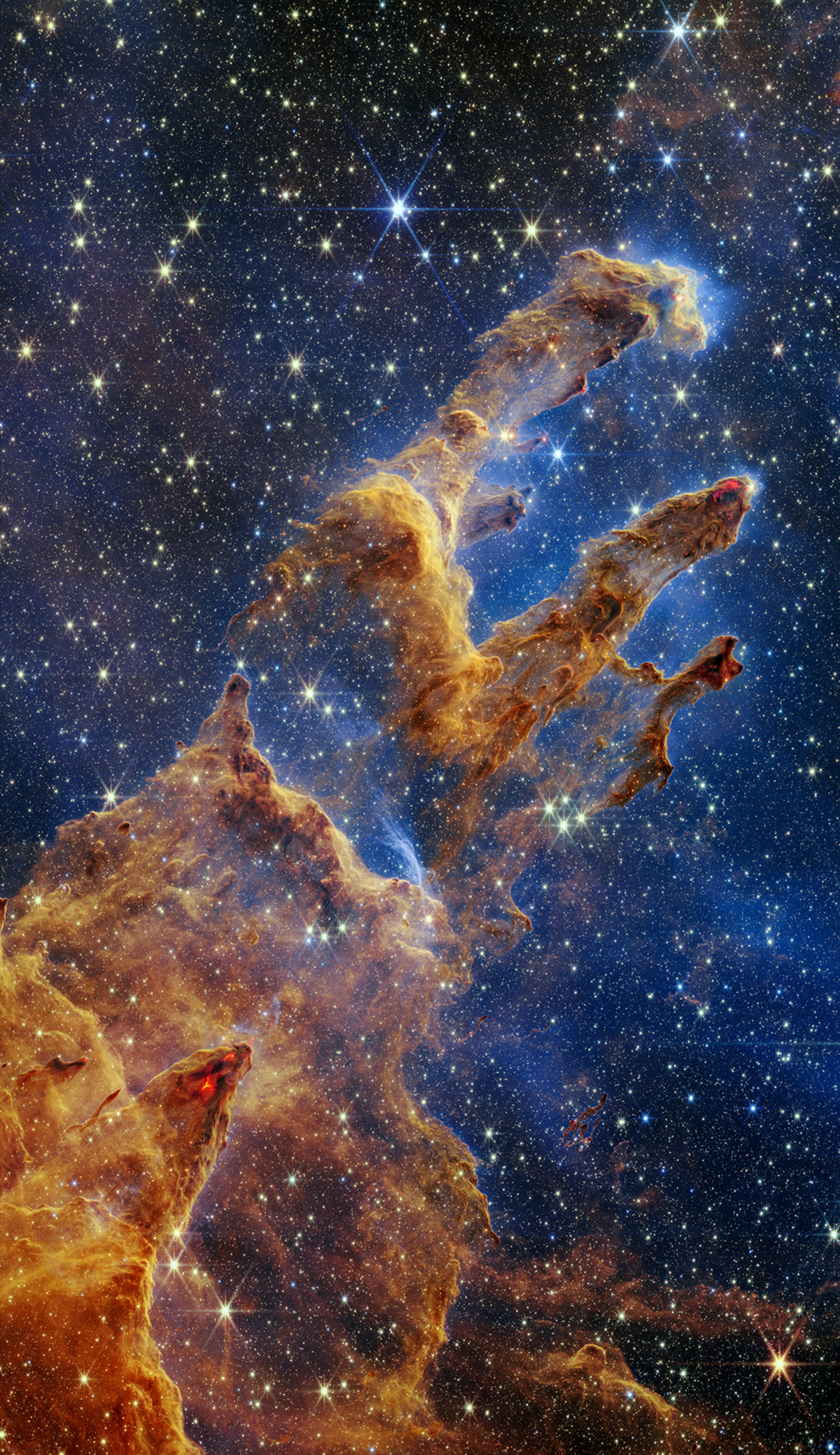
Pillars of Creation captured by the James Webb Space Telescope — towering columns of interstellar gas and dust in the Eagle Nebula

Deep-Sky Telescope Guide · Updated April 2026

Best Telescope for Deep Space 2026

The Sky-Watcher Classic 200P Dobsonian is our top pick for the best telescope for deep space viewing in 2026. Compare 10 expert-ranked scopes for galaxies, nebulae, and star clusters — from compact tabletop Dobsonians to 14-inch observatory-class instruments.

Top PickClassic 200P (8")
Best GoToNexStar 8SE
Budget PickStarSense LT 114AZ
Sweet Spot8" Aperture
By Telescope Advisor Editorial Team Published Updated Editorial Standards

Quick Answer: Which Deep-Sky Telescope Should You Buy?

For most observers, an 8-inch Dobsonian (like the Sky-Watcher Classic 200P) offers the best combination of aperture, value, and ease of use. It gathers 4× more light than a 4-inch scope and reveals hundreds of galaxies, nebulae, and star clusters.

Best Overall Value

Sky-Watcher Classic 200P Dobsonian — 8" aperture with quality 2" focuser and included eyepieces from one of astronomy's most trusted brands. Resolves galaxy arms, emission nebulae, and globular clusters with ease.

Best for Beginners

Celestron StarSense Explorer DX 130AZ — phone-guided object finding makes deep-sky exploration effortless for newcomers.

Why Aperture Is Everything for Deep Sky

Deep-sky objects — galaxies, nebulae, and star clusters — are extremely faint. Aperture (the diameter of the primary mirror or lens) determines how much light your telescope collects. A bigger aperture reveals more detail and fainter objects. Here's what each aperture class can show you:

Aperture → Deep-Sky Performance

Aperture Light Grasp What You Can See Price Range
4–5" 204–306× Orion Nebula, Andromeda (core), Pleiades, brighter Messier objects $150 – $350
6" 459× Ring Nebula detail, galaxy cores, 100+ deep-sky objects $300 – $500
8" 816× Galaxy arms (M51), planetary nebulae, faint globulars, most Messier & NGC objects $400 – $800
10–12" 1,275–1,837× Faint galaxy structure, Horsehead (with filters), detailed globular resolution $600 – $1,500
14"+ 2,551×+ Faint galaxy groups, quasars, subtle nebula filaments, Abell clusters $1,500+

Light grasp is relative to the naked eye (7mm pupil). An 8" scope collects 816× more light than your eye alone.

Editor’s Pick — Best Overall Deep-Sky Telescope

Sky-Watcher Classic 200P Dobsonian Telescope

8" / 200mm Aperture f/6 • 1200mm FL
Why we picked it: Sky-Watcher's legendary 8-inch Dobsonian with a quality 2" Crayford-style focuser, included 10mm and 25mm eyepieces, and 6×30 finder scope. Resolves galaxy arms in M51, Veil Nebula filaments, and individual stars in M13 — backed by one of amateur astronomy's most trusted brands.
Check Price on Amazon

Affiliate link — we may earn a commission at no extra cost to you.

All 10 Deep-Sky Telescopes Compared

Click any telescope name to check its current price. All affiliate links are clearly marked.

Sky-Watcher Classic 200P Dobsonian

Type:Dobsonian Aperture:8" (200mm) Focal Length:1200mm Price:$$ Best For:Best overall value

Proven 8-inch parabolic primary mirror with quality coatings. Includes 2-inch Crayford-style focuser, 10mm and 25mm eyepieces, and 6x30 finder scope. Excellent light grasp for galaxies and nebulae.

Celestron NexStar 8SE

Type:Schmidt-Cassegrain Aperture:8" (203mm) Focal Length:2032mm Price:$$$ Best For:GoTo convenience

Computerized GoTo mount with 40,000+ object database. Compact design with 8 inches of aperture for resolving galaxy detail and planetary nebulae.

Sky-Watcher Flextube 250P SynScan

Type:Dobsonian (collapsible) Aperture:10" (254mm) Focal Length:1200mm Price:$$$ Best For:Portability + big aperture

Collapsible truss-tube design for easy transport. 10 inches of aperture with computerized SynScan tracking for faint galaxies and nebulae.

Celestron StarSense Explorer DX 130AZ

Type:Newtonian Aperture:5.1" (130mm) Focal Length:650mm Price:$$ Best For:Beginners on a budget

StarSense app uses your phone camera to identify objects and guide you to them. Great entry point for brighter deep-sky targets like Orion Nebula and Andromeda.

Celestron Advanced VX 8" EdgeHD

Type:Schmidt-Cassegrain Aperture:8" (203mm) Focal Length:2032mm Price:$$$$ Best For:Deep-sky astrophotography

EdgeHD optics eliminate field curvature for sharp stars edge-to-edge. Advanced VX equatorial mount supports long-exposure imaging of galaxies and nebulae.

Unistellar eQuinox 2

Type:Smart telescope Aperture:4.5" (114mm) Focal Length:450mm Price:$$$$ Best For:Light-polluted skies

Enhanced Vision Technology stacks exposures in real time, revealing galaxy structure and nebula color even from city backyards. Fully automated pointing and tracking.

Celestron StarSense Explorer LT 114AZ

Type:Newtonian (Alt-Az) Aperture:4.5" (114mm) Focal Length:1000mm Price:$$ Best For:Budget with phone navigation

StarSense app uses your phone camera to guide you to objects. 114mm Newtonian with f/8.8 focal ratio delivers clear planetary and bright deep-sky views at an affordable price.

Sky-Watcher EQ6-R Pro (OTA separate)

Type:Equatorial mount Aperture:Mount only Focal Length:N/A Price:$$$$ Best For:Serious astrophotography mount

Belt-driven equatorial mount with 44 lb payload capacity. Essential foundation for long-exposure deep-sky imaging with any OTA.

Celestron CGX-L Equatorial 1400

Type:Schmidt-Cassegrain Aperture:14" (356mm) Focal Length:3910mm Price:$$$$$ Best For:Maximum light grasp

Massive 14-inch aperture resolves faint galaxy arms, globular cluster stars, and planetary nebula detail that smaller scopes cannot. Heavy-duty CGX-L mount.

$ = Under $250 · $$ = $250–$600 · $$$ = $600–$1,200 · $$$$ = $1,200–$3,000 · $$$$$ = $3,000+
Budget ($150–$350)

Perfect entry point for beginners exploring brighter Messier objects.

StarSense Explorer LT 114AZ

4.5" Newtonian with phone-guided StarSense navigation. Great entry point for bright Messier objects.

StarSense Explorer DX 130AZ

Phone-guided navigation. Same 5.1" aperture with app-assisted object finding.

Mid-Range ($400–$1,200)

The sweet spot. 8–10 inches of aperture unlock hundreds of deep-sky targets.

Classic 200P

Proven 8" Dob from Sky-Watcher. Our top pick.

NexStar 8SE

GoTo automation finds 40,000+ objects for you. Compact SCT design.

Flextube 250P SynScan

10" collapsible tube + GoTo. Big aperture that fits in a car.

How to Choose a Deep-Sky Telescope

Four factors matter most when selecting a telescope for galaxies, nebulae, and star clusters. Get these right and you'll enjoy years of deep-sky exploration.

1

Aperture First

Buy the largest aperture you can comfortably transport. For deep sky, aperture matters more than magnification, mount type, or brand. An 8" mirror collects 4× more light than a 4" lens.

2

Mount Matters

Dobsonians offer the most aperture per dollar for visual observing. GoTo mounts add convenience. Equatorial mounts are essential for long-exposure astrophotography.

3

Focal Ratio (f/number)

Lower f/ratios (f/4–f/5) give wider fields for large nebulae. Higher f/ratios (f/10–f/12) suit planetary nebulae and galaxy detail. Most beginners do well with f/5–f/6.

4

Portability

The best telescope is the one you actually use. A 12" Dob is amazing but heavy. Consider collapsible designs (Flextube) or compact scopes (StarSense LT 114AZ) if you drive to dark sites.

Pro tip: Don't underestimate eyepiece quality. A $60 wide-field eyepiece can transform the deep-sky experience in any telescope. Budget at least $50–$100 for a good 2" eyepiece alongside your scope.

What Can You Actually See Through a Deep-Sky Telescope?

Expectations matter. Deep-sky objects won't look like Hubble photos through an eyepiece — but they're breathtaking in their own way. Here's what to realistically expect from dark skies with different apertures.

Galaxies

4–5": Andromeda as a fuzzy oval, M81/M82 as smudges. 8"+: Spiral arms in M51 (Whirlpool), dust lane in M82, dozens of galaxy pairs. 12"+: Faint galaxy groups, Leo Triplet detail, galaxy halos.

Nebulae

4–5": Orion Nebula structure, Ring Nebula as a small donut. 8"+: Veil Nebula filaments (with OIII filter), Lagoon Nebula detail, Dumbbell Nebula shape. 12"+: Crescent Nebula, faint planetary nebulae.

Star Clusters

Any aperture: Open clusters (Pleiades, Double Cluster) are stunning. 6"+: Globular cluster edges resolve into stars. 8"+: M13 explodes into thousands of pinpoint stars. 12"+: Faint globulars fully resolved to the core.

Planetary Nebulae

4–5": Ring Nebula (M57) and Dumbbell (M27) visible. 8"+: Blue Snowball, Eskimo Nebula show color and shape. 12"+: Central stars visible, subtle internal structure in larger planetaries.

Essential Accessories for Deep-Sky Observing

The right accessories can dramatically improve your deep-sky experience. Here's what experienced observers consider essential.

Must-Have Accessories

  • Wide-field eyepiece: A 2" eyepiece (30–35mm, 70° AFOV) for sweeping views of large nebulae and open clusters.
  • UHC/OIII filter: Narrowband filters dramatically enhance emission nebulae like the Veil, Lagoon, and Orion Nebula.
  • Telrad or RACI finder: A zero-magnification finder makes star-hopping to faint targets much easier.

Nice to Have

  • Star atlas: Sky Atlas 2000.0 or Interstellarum Deep Sky Atlas for planning observing sessions.
  • Red flashlight: Preserves dark adaptation during extended sessions.
  • Dew heater: Prevents corrector plate or eyepiece fogging on humid nights.

Budget tip: An OIII filter ($60–$120) is the single best accessory for deep-sky observing. It suppresses light pollution and makes emission nebulae pop with dramatically improved contrast.

Our Testing Methodology

Every telescope on this list has been evaluated against deep-sky-specific criteria, not just general performance metrics. Here's how we assessed each pick:

Criterion Weight What We Evaluated
Light Gathering 30% Aperture, mirror/lens coatings, central obstruction impact on contrast
Optical Quality 25% Star test results, collimation stability, coma/aberration at field edges
Mount Stability 20% Vibration damping, smooth tracking, GoTo accuracy for computerized models
Value & Accessories 15% Included eyepieces, finders, focuser quality, upgrade path
Portability 10% Weight, setup time, transportability to dark-sky sites

We prioritize real-world deep-sky performance over marketing specs. Telescopes were evaluated under Bortle 3–5 skies across multiple sessions.

Best Telescope for Deep Space Viewing: What You Need to Know

The best telescope for deep space viewing is the one that maximises aperture for your budget and is comfortable enough that you actually use it regularly. After evaluating 10 instruments across aperture, optical quality, mount stability, and real-world dark-sky performance, the Sky-Watcher Classic 200P Dobsonian stands as the definitive answer for most observers in 2026. Its 8-inch (200mm) parabolic mirror collects over 816 times more light than the naked eye, revealing spiral arms in the Whirlpool Galaxy (M51), the Ring Nebula's central star, and hundreds of NGC deep-sky objects that are completely invisible to smaller scopes.

For deep space astrophotography — where long exposures of galaxies and nebulae require precise tracking — the best telescope for deep space changes significantly. The Celestron Advanced VX 8" EdgeHD combines flat-field optics with a robust equatorial mount, making it the imaging platform of choice for serious astrophotographers targeting faint deep-space objects like the Horsehead Nebula or the Leo Triplet.

Best for visual deep space

Sky-Watcher Classic 200P — 8" aperture, f/6, parabolic mirror. Resolves galaxy arms and globular clusters with ease.

Check price →

Best budget deep space scope

Celestron StarSense Explorer DX 130AZ — phone-guided finding makes deep-sky exploration accessible for beginners under $300.

Check price →

Best deep space astrophotography

Celestron Advanced VX 8" EdgeHD — flat-field SCT optics on an equatorial mount for long-exposure deep-space imaging.

Check price →

Frequently Asked Questions

What is the best telescope for seeing galaxies?

An 8-inch Dobsonian like the Sky-Watcher Classic 200P offers the best balance of aperture, portability, and value for galaxy viewing. It can resolve spiral arms in M51 and dust lanes in edge-on galaxies like NGC 4565.

Can I see deep-sky objects from a city?

Yes, but with limitations. Bright targets like M42 (Orion Nebula), M13, and the Pleiades are visible from suburban skies. An OIII or UHC filter helps with nebulae. Smart scopes like the Unistellar eQuinox 2 use stacking to overcome light pollution.

Is a Dobsonian or Schmidt-Cassegrain better for deep sky?

Dobsonians give you more aperture per dollar and wider fields — ideal for visual deep-sky. SCTs (like NexStar 8SE) are more compact and often include GoTo, but cost more per inch of aperture. For pure visual observing, Dobsonians win on value.

How much should I spend on a deep-sky telescope?

$400–$600 gets you an excellent 8" Dobsonian that will last decades. Budget $50–$100 more for a quality wide-field eyepiece and nebula filter. Under $300, the Celestron StarSense Explorer LT 114AZ is a capable starter scope with phone-guided navigation.

What magnification do I need for deep-sky objects?

Most deep-sky objects look best at low-to-medium magnification (40–120×). Galaxies and large nebulae need wide fields (low power), while planetary nebulae and small globulars benefit from higher magnification. A 30mm 2" eyepiece giving 40× in an f/5 scope is a great starting point.

Do I need a tracking mount for deep-sky observing?

For visual observing, no. A Dobsonian's manual push-to tracking works perfectly — deep-sky objects move slowly and you just nudge the scope. Tracking/equatorial mounts are only essential for astrophotography (long exposures).

Related Telescope Guides