Quick Answer: Lyrid Meteor Shower 2026
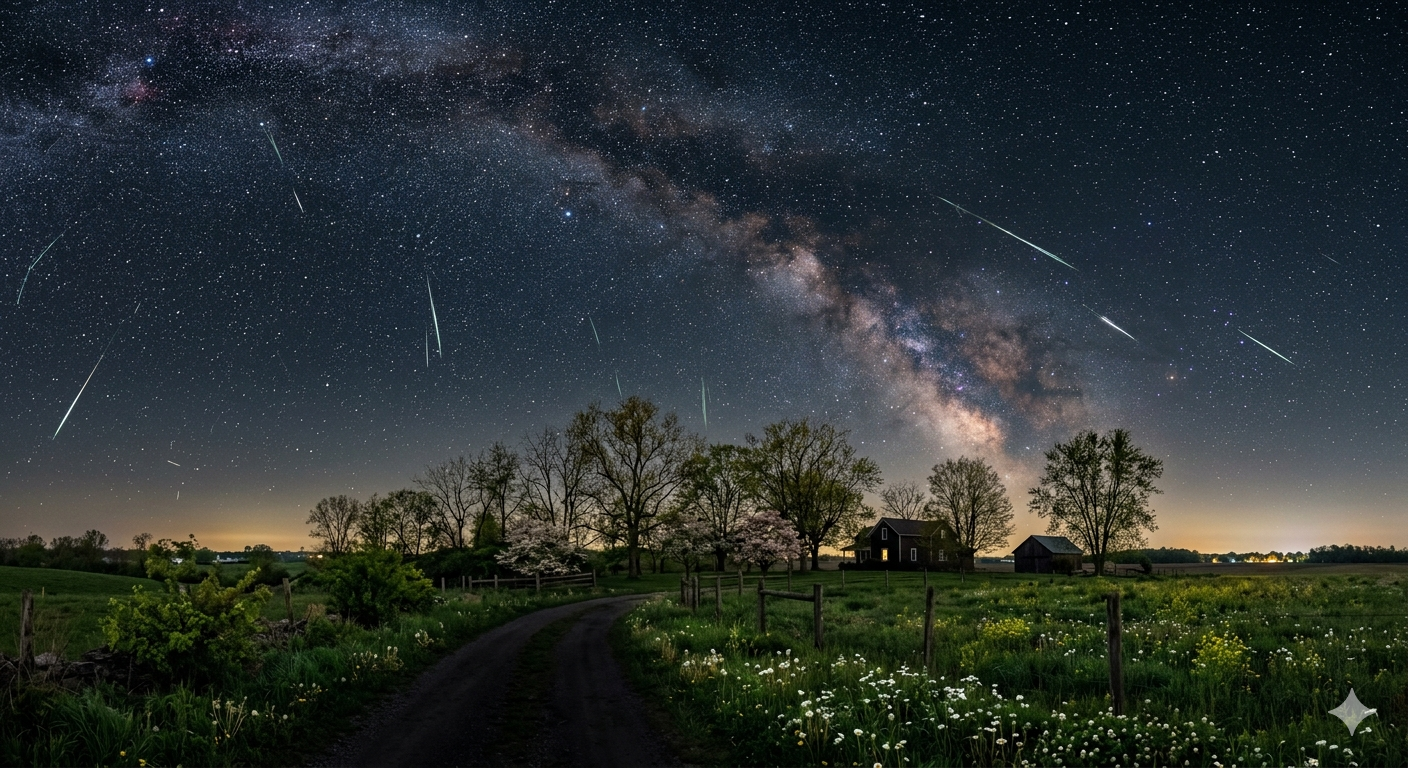
The Lyrid meteor shower 2026 peaks on the night of April 21–22 with an expected rate of 18–20 meteors per hour under ideal dark-sky conditions (ZHR). The moon reaches new phase around April 17–18, so by peak night only a thin crescent remains — it sets before 10 PM in all US time zones, leaving completely dark skies for the prime viewing window from 1:00 AM to dawn. Face northeast, lie flat on your back, and allow 20 minutes for your eyes to dark-adapt. No telescope needed for meteors themselves, but a scope dramatically enriches the night with nearby spring deep-sky targets.
For meteors: naked eyes only
Reclining chair, wide sky view, no optics, minimal phone light. Telescope field of view is far too narrow for fast-moving meteors.
Between bursts: use a telescope
Point at M13, M3, or the Beehive Cluster during lulls — all high in the spring sky and stunning on a moonless night. Jupiter and Venus are also high in April skies and look spectacular through any scope. See our best telescope for viewing planets guide if you’re considering an upgrade.